a-zsoft
Artificial Intelligence and business
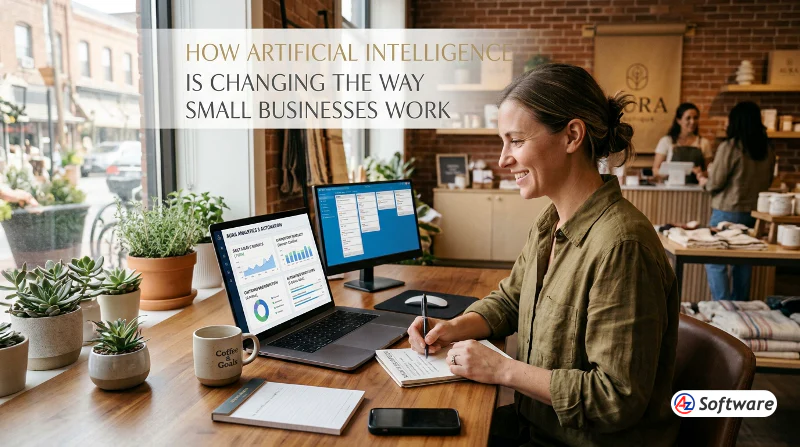
For a long time, artificial intelligence (AI) felt like a corporate luxury reserved for tech giants with massive IT budgets and dedicated data science teams. Today, that landscape has completely transformed.
Affordable, user-friendly AI applications have leveled the playing field, giving small business owners and lean teams the power to operate with the efficiency of much larger organizations.
Whether you run a local retail shop, a digital marketing agency, or a boutique consulting firm, integrating AI into your daily operations is no longer just about keeping up with trends – it is about working smarter, saving valuable hours, and scaling sustainably.
1. Supercharging Small Business Productivity
Small business owners wear many hats – CEO, accountant, HR manager, and customer service representative all rolled into one. This constant multitasking often leads to burnout and leaves little time for high-level strategy.
AI acts as a tireless digital assistant that absorbs routine administrative burdens. Instead of spending hours manually drafting internal memos, organizing messy spreadsheets, or summarizing lengthy meeting transcripts, modern AI tools can handle these tasks in seconds.
For instance, AI-powered meeting assistants can record, transcribe, and automatically pull key action items from a client call, ensuring nothing falls through the cracks. By minimizing time spent on repetitive clerical work, small teams can redirect their energy toward growth, innovation, and client relationships.
2. Essential AI Tools for Content Creation, Marketing, and Customer Support
Marketing and customer engagement are areas where small businesses often struggle due to limited manpower. AI bridges this gap by making professional-grade capabilities accessible to everyone:
- Content Creation & Copywriting: Writing regular blog posts, social media captions, and email newsletters can drain a small team’s creative reserves. Tools like ChatGPT, Claude, and Jasper help brainstorm content angles, draft outlines, and refine copy to match a brand’s unique voice. Meanwhile, platforms like Canva AI make it simple to generate eye-catching graphics and marketing collateral without hiring a full-time designer.
- Marketing Automation: AI-driven tools can analyze customer behavior to optimize ad spend, personalize email marketing sequences, and segment audiences, ensuring your message reaches the right people at the exact right time.
- 24/7 Customer Support: Intelligent chatbots and conversational agents can now handle routine customer inquiries regarding shipping updates, business hours, and basic troubleshooting. This ensures your customers receive instant answers even outside of standard business hours, significantly improving satisfaction while reducing support ticket backlogs.
3. The Power of Workflow Automation
Beyond individual tasks, the true magic of AI lies in workflow automation. Platforms like Zapier and n8n allow small businesses to connect apps that previously didn’t talk to one another.
Imagine a scenario where a customer fills out a contact form on your website:
- An AI agent instantly categorizes the inquiry and drafts a personalized follow-up email.
- The contact details are automatically added to your CRM system.
- A task is created in your project management board, and a notification is sent to the relevant team member.
What used to take twenty minutes of manual data entry now happens instantaneously in the background. This reduction in manual touchpoints not only saves hours of labor but also eliminates costly human errors.
4. Practical Considerations When Adopting AI
While the benefits are undeniable, diving headfirst into AI without a strategy can lead to wasted subscription costs and employee frustration. To ensure a smooth rollout, keep these practical considerations in mind:
- Start with a Specific Problem: Don’t adopt AI just for the sake of it. Identify one bottleneck in your business—such as slow customer response times or a sluggish social media publishing schedule—and find a tool designed specifically to solve it.
- Prioritize Data Privacy and Security: Be mindful of the data you feed into public AI models. Never input sensitive customer PII (Personally Identifiable Information) or confidential financial records unless you are using secure, enterprise-grade platforms with strict privacy guarantees.
- Maintain Human Oversight: AI is a powerful co-pilot, but it should never take the wheel completely. Always review AI-generated content, customer communications, and financial summaries for accuracy, bias, and brand alignment. Human empathy and judgment remain irreplaceable.
- Take a Step-by-Step Approach: Introduce tools through a small pilot group before rolling them out company-wide. Give your team time to learn proper prompting techniques, build confidence, and provide feedback.
Conclusion: The Future is Accessible
Artificial intelligence has officially transitioned from a futuristic concept into an everyday business partner. For small business owners, it offers a lifeline to cut through administrative clutter, elevate marketing efforts, and deliver exceptional customer experiences without requiring an enterprise-sized budget.
By taking a measured, human-first approach to adoption, small businesses can harness AI not to replace human touch, but to amplify it – allowing you to focus on what you do best: building and growing your business.
Thanks for reading. Hope you all must have liked this article. Please comment below and share with your friends, whom you think are worth sharing. good luck!
What is the one repetitive task in your business that you wish an AI could take over tomorrow? Let us know in the comments below!
Share this Software